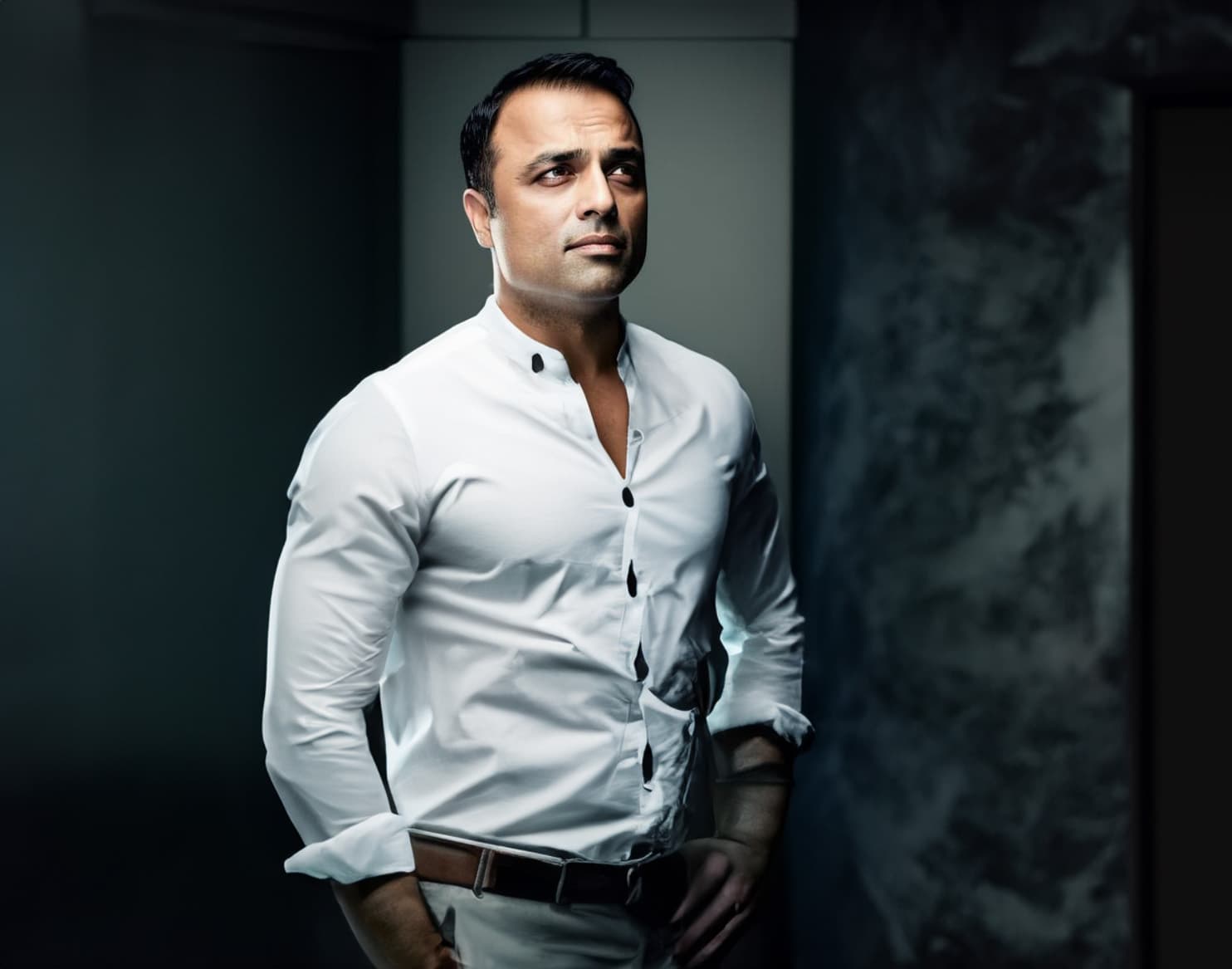

Although I dropped out of high school at the age of 16 to pursue my dreams in business, I have never downplayed the importance of education. Quite the contrary. In my guest lectures, I have urged students to stay in school and never stop learning because learning is a lifelong journey. Through my foundation, I also worked to give students opportunities through scholarships, mentorships, and school refurbishment.
But if I had not dropped out and were graduating in 2017, what would I have done?
First and foremost, I have always felt that if you do what you love, you will spend the rest of your life loving it – that it will never feel like work. Second, I’ve always desired to make a positive difference in the world. With these two principles as my guideline, and my passion to stay focused in the emerging technologies, I would have picked a profession where I would continue to learn – daily – and raise the bar higher for everyone else around me.
I have always said each day is a new opportunity. In 2017, I had graduated from my last company and was learning about machine learning, deep learning, and ways artificial intelligence could enhance our lives. It was vastly different from how I started when I was 16. My learning never ended. Because, when the learning ends, someone else behind you is ready to pick up where you left off and move ahead of you. So, my advice to the graduating students is: Always continue to learn. School ends but learning never does.
In 2017, even as headline unemployment in the United States was low, employers were talking about jobs they could not fill because candidates lacked specific skills. The problem was not simply the number of people willing to work. It was the gap between available skills and changing work.
While mentoring at a high school in 2017, a graduating senior asked me to explain the school’s “STEM program.” Most people in Silicon Valley knew the term, but the question reminded me how easily the technology sector could become trapped in its own acronym-filled bubble. As artificial intelligence advanced, strong foundations in science, technology, engineering, and mathematics mattered. We needed to give young people the skills to make a meaningful impact.
This piece offered a quick overview of STEM and how students could prepare. STEM refers to education across four disciplines: science, technology, engineering, and mathematics. In 2017, those skills were central to many technology and research roles, and graduates with strong foundations in them were entering fields with significant demand.
In advice to graduates published in 2017, Bill Gates highlighted three fields he believed had exceptional potential to change the world:
“One is artificial intelligence. We have only begun to tap into all the ways it will make people’s lives more productive and creative. The second is energy, because making it clean, affordable, and reliable will be essential for fighting poverty and climate change. The third is the biosciences, which are ripe with opportunities to help people live longer, healthier lives.”
STEM education takes an applied and interdisciplinary approach. Instead of teaching these disciplines as discrete and separate subjects, it integrates them to form a cohesive paradigm for learning that is based on the real-world applications.
Countries such as the United States had historically led in technology, but the 2017 discussion was already focused on how many students lost interest in STEM before graduation. Why were school systems falling short when the need for those skills was rising?
The answer being many schools continue to focus on “memorization” than on problem-solving education. This derails students’ interest away from the STEM subjects – and frankly, is the most boring way to learn. Students are inherently curious – if we spark their interest at an early age, it could instill a lasting desire to pursue a career in any of these fields.
If I were to ask my friends in India (and even in some schools here in the US), the focus on Math/Science is still primarily on memorizing. We need to move away from this method – as fast as humanly possible. Instead, the focus should be on collaboration and teamwork. After All, this is how we work and build great products.
When I looked around my company in 2017, I saw teams working in “collaboration” – not in silos or in competition against each other. Product development, sales strategy, even global financing worked as a “TEAM” – with each individual owning a critical piece to the task – best suited for their skillset. The success is ultimately determined by individual contributions accumulating towards a common goal.
STEM lessons focus on real-world issues and problems. These lessons focus on hands-on & collaborative approach, where the path to learning is open ended. STEM also focuses on teaching the students to reframe the failures as a necessary path to learning. Those of us who have been entrepreneurs all of our lives – wish we had this time of trying while growing up. Point being, STEM lessons planning fundamentally requires a different dynamics of lesson plans and retraining for the teachers to prepare for the new curriculum.
Making that change at scale required curriculum investment and teacher training, not just new labels for old lesson plans.
Projected Growth in Jobs in STEM
Where are we headed?
Scientific innovation had become central to a knowledge-based global economy. To succeed in an increasingly technological and information-driven world, students needed stronger capabilities in science, technology, engineering, and mathematics.
The direction was clear in 2017: more professions were incorporating technical skills while too many students were leaving school without the preparation to pursue them. A competitive economy depended on closing that gap.
Global Effort
I am a great proponent of education. The foundation I created had offered scholarships to young minds to acquire higher education – regardless of their economic difficulties. I believed technology had advanced well enough that we no longer are held behind the geographical barriers. Students should access free online resources, through distant learning, to learn on various subjects and can do so on their own time as well as at their own pace.
If students reside in countries where regulation is slow to bring change, I encourage them to use distance learning to give them the competitive advantage. In 2017, there were many places where students could take free or low-cost courses. Some even included certification training in cyber security, computer science classes, advanced mathematics, deep learning, machine learning and several programming languages.
But do not take my word for it. Make sure you love the work. School ends. Learning never does.


